Insights & Articles
From the Desk of Alana
Perspectives on leadership, communication, and what it means to lead with intention.
Communication & Leadership
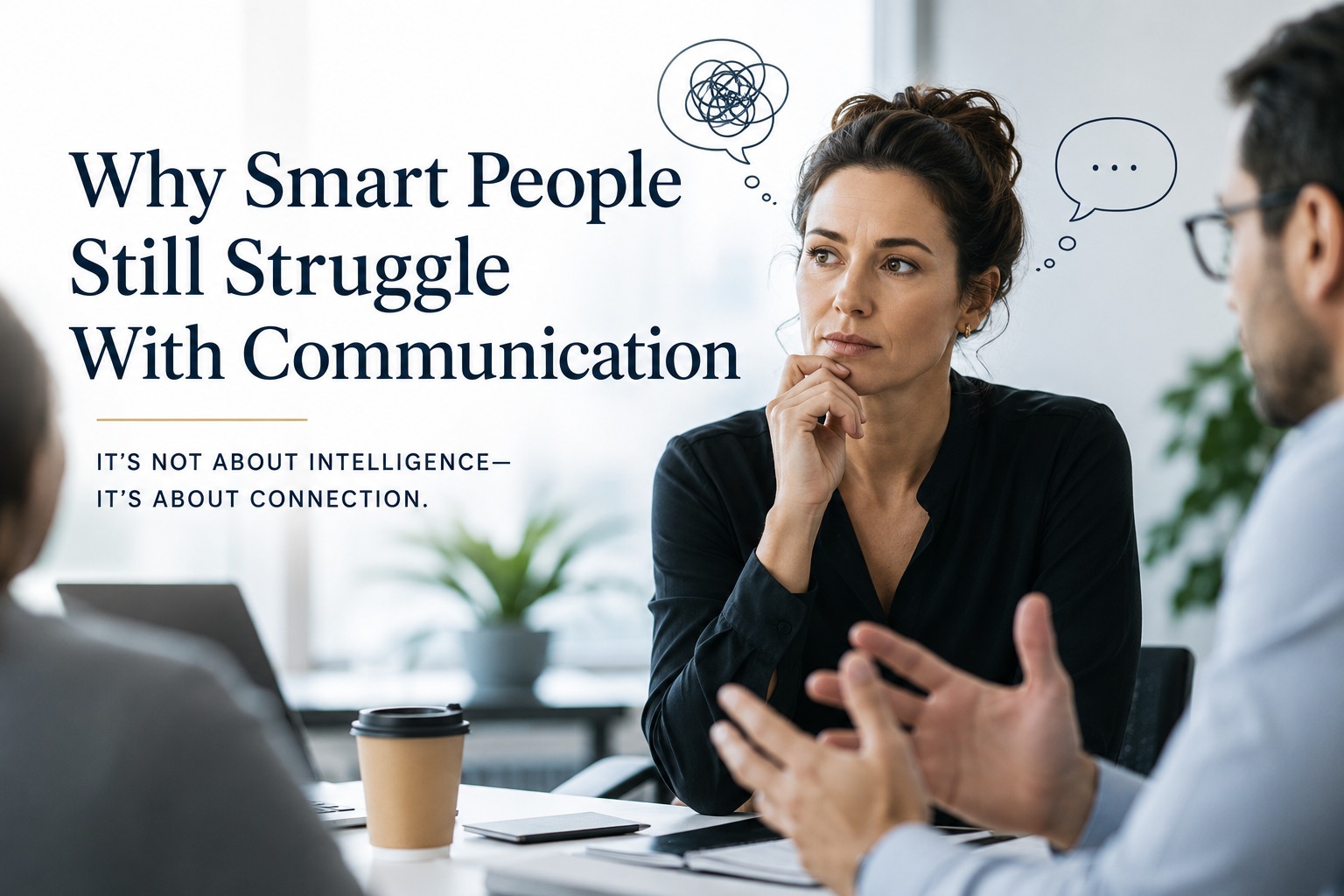
Why Smart People Still Struggle With Communication
Communication problems are rarely about intelligence — they're about understanding. Even highly capable people struggle when they prioritize information over connection.
Read Article
Why Smart People Still Struggle With Communication
It's not about intelligence — it's about connection.
Communication problems are rarely about intelligence — they're about understanding. Discover why even highly capable people struggle with communication and how emotional intelligence changes the conversation.
One of the biggest misconceptions about communication is that intelligence automatically makes someone a strong communicator.
It doesn't.
In fact, some of the smartest people struggle the most.
Why?
Because communication is not just about knowledge. It's about emotional intelligence, self-awareness, timing, listening, adaptability, and human connection.
Highly intelligent people often experience communication challenges because they:
- Assume others think like they do
- Prioritize information over emotion
- Move too quickly through conversations
- Overexplain or underexplain
- Avoid difficult conversations
- Become frustrated when others do not understand immediately
Communication problems are rarely about capability. They are usually about translation.
People are not simply exchanging information — they are exchanging emotions, assumptions, expectations, and experiences.
Strong communicators understand that success is not measured by what was said.
It is measured by what was understood.
The goal of communication is not proving you are right.
The goal is creating understanding.
And sometimes the smartest move in a conversation is not talking more.
It is listening better.
Originally published on Noomii Coaching Blog.
Common Questions
Frequently Asked Questions
Smart people often struggle with communication because they may prioritize information over emotion, assume others think like them, or move too quickly through conversations. Communication involves more than just intellect; it requires emotional intelligence and adaptability.
The true goal of effective communication is to create understanding, not just to prove a point or exchange information. It's about translating thoughts, emotions, and experiences in a way that resonates with the listener.
Highly intelligent individuals might overexplain or underexplain, avoid difficult conversations, or become frustrated when their message isn't immediately grasped. Their struggles often stem from a focus on capability rather than translation and connection.
To improve communication skills, focus on emotional intelligence, self-awareness, active listening, and adaptability. Understanding that communication is about what is understood, not just what is said, is key to fostering better connections.
Executive-leadership coaching can provide personalized strategies to enhance communication by addressing underlying challenges like prioritizing emotion and active listening. A coach can help you develop the skills needed to create better understanding and connection in your interactions.
You can find an executive-leadership coach specializing in communication by visiting Noomii. Noomii's directory allows you to browse profiles and connect with coaches who can help you refine your communication style and leadership presence.
Work With Alana
Ready to Communicate with Greater Clarity?
Coaching helps you close the gap between what you mean and what people actually hear.
Book a Discovery Call